Download AI Transformation Leader.AB-731.PassLeader.2026-11-26.65q.vcex
| Vendor: | Microsoft |
| Exam Code: | AB-731 |
| Exam Name: | AI Transformation Leader |
| Date: | Nov 26, 2026 |
| File Size: | 3 MB |
How to open VCEX files?
Files with VCEX extension can be opened by ProfExam Simulator.
Discount: 20%


Demo Questions
Question 1
In which scenario is Azure Machine Learning most likely to deliver strategic value for an organization?
- Using historical sales data to forecast demand across product categories.
- Digitizing a paper-based process to reduce errors.
- Entering customer feedback into a spreadsheet to understand sentiment.
- Sending personalized emails to customers based on the customer location.
Correct answer: A
Explanation:
Azure Machine Learning (Azure ML) delivers strategic value by transforming historical sales data into a competitive advantage through advanced demand forecasting. By identifying complex patterns in past consumer behavior, it helps businesses optimize high-stakes operational areas such as inventory management, production planning, and resource allocation. Benefits Inventory Optimization: Businesses can maintain leaner inventory levels, drastically reducing storage costs and minimizing the risk of both stockouts and overstocking. Financial Performance: Improved forecast accuracy directly protects margins by reducing the need for emergency shipping, overtime labor, and waste from unsold goods. Strategic Growth: Accurate long-term forecasts provide a reliable roadmap for planning product launches, marketing promotions, and market expansion. Operational Agility: Azure ML's Automated Machine Learning (AutoML) allows companies to quickly adapt to market shifts—like seasonal trends or unexpected disruptions—by continuously learning from new data. Reference: https://learn.microsoft.com/en-us/azure/architecture/ai-ml/idea/next-order-forecasting
Question 2
Your company discovers that several employees use personal ChatGPT accounts to assist with work tasks. You are concerned about proprietary data being shared externally.
You need to evaluate the business value of rolling out Microsoft 365 Copilot.
Which capability is a key benefit of using Copilot instead of a personal ChatGPT account?
- analyzing and producing reports based on complex data
- generating ideas and solving issues
- drafting documents, emails, presentations, and marketing materials
- accessing internal data in accordance with existing Microsoft 365 policies
Correct answer: D
Explanation:
A major, defining advantage of Microsoft 365 Copilot over a personal ChatGPT account is its deep, native integration with an organization's internal data—including emails, documents, chats, and meetings—while strictly adhering to existing Microsoft 365 security, compliance, and privacy policies. Here is a breakdown of why this is a critical differentiator: 1. Access to Internal Data ("Grounding") Microsoft 365 Copilot: Accesses your organization’s data via Microsoft Graph. It can summarize, analyze, and create content based on your Word documents, emails in Outlook, spreadsheets in Excel, and meetings in Teams. Personal ChatGPT: Does not have access to your private company files, emails, or internal systems unless you manually copy and paste that information into the chat. 2. Adherence to Security and Compliance Policies Microsoft 365 Copilot: Inherits your organization's existing security configurations, such as sensitivity labels, Data Loss Prevention (DLP) policies, and identity-based access controls. If you do not have permission to view a file, Copilot will not use that file to answer your prompt. Personal ChatGPT: Operates outside your corporate security boundary. Using a personal account to analyze company data can risk leaking confidential information to a third-party, which is typically against corporate security policies. Reference: https://www.microsoft.com/en-us/microsoft-365-copilot/copilot-vs-chatgpt-enterprise
Question 3
Your company manages an online catalog of office supplies.
You plan to use a generative AI solution to create product descriptions for your company’s website.
The solution must meet the following requirements:
- Ensure that the descriptions can be posted immediately after they are created.
- Enable the selection and inclusion of product details in each description.
- Be fast and simple for non-technical staff to use.
What is the best type of solution to use? More than one answer choice may achieve the goal. Select the BEST answer.
- custom Azure Machine Learning model
- the Researcher agent in Microsoft 365 Copilot
- an interactive AI agent
- a fine-tuned large language model (LLM)
Correct answer: B
Explanation:
Using the Researcher agent within Microsoft 365 Copilot provides a highly effective solution for creating and immediately posting product descriptions. It allows non-technical staff to generate tailored, brand-aligned content by leveraging both internal product data and web research, allowing for immediate publication. Reference: https://learn.microsoft.com/en-us/dynamics365/business-central/ai-overview
Question 4
Your company plans to adopt AI across multiple business units.
You need to ensure that all AI projects align with the company’s business strategy and are implemented responsibly.
What is the best approach to achieve the goal? More than one answer choice may achieve the goal. Select the BEST answer.
- Allow each department to deploy its own AI tools and workflows.
- Delegate AI decision-making to the company’s IT department.
- Outsource AI development to an external vendor.
- Establish an AI council to provide guidance, oversight, and coordination.
Correct answer: D
Explanation:
An AI council is a cross-functional, board-level advisory body designed to align AI initiatives with corporate strategy, ensuring projects are ethically, legally, and fiscally responsible. It provides oversight, manages risks, and fosters, cross-departmental coordination, crucial for driving adoption and avoiding siloed, unaligned AI projects. Benefits Enhanced Decision-Making: Coordinated, expert-driven input leads to faster, better-aligned decisions. Trusted AI: Builds, trust through transparent, non-biased, and, accountable, systems. Value Realization: Ensures AI investments deliver measurable value to the organization. Reference: https://cognitivepath.com/ai-councils
Question 5
Your company has a Microsoft 365 subscription and uses Microsoft 365 Copilot Chat.
Some users need to build and use declarative agents that can access work data.
Which type of license should you recommend for the users?
- a Microsoft 365 Copilot add-on license
- Microsoft Copilot Studio user license
- a Copilot Chat pay-as-you-go plan
Correct answer: A
Explanation:
To use declarative agents that access work data (such as SharePoint or Graph connectors), users generally need a Microsoft 365 Copilot add-on license. While Microsoft 365 Copilot Chat is included in most business subscriptions at no extra cost, its native capabilities are primarily limited to web-grounding and basic instructions. Accessing organizational data via agents typically requires one of the following licensing paths: 1. Microsoft 365 Copilot Add-on License This is the most direct method. It grants full access to: Declarative agents grounded in tenant data without additional usage fees. Copilot Studio for authoring and managing these agents. Embedded Copilot features in Word, Excel, Outlook, and Teams. 2. Pay-As-You-Go (Consumption) Model If users do not have a full Copilot add-on license, organizations can enable metered usage (consumption-based billing). Usage-based billing: Interactions with agents that access tenant data (SharePoint, connectors) consume "Copilot credits". Requirement: This requires an Azure subscription and a billing policy set up in the Microsoft 365 admin center. Reference: https://support.microsoft.com/en-gb/topic/how-copilot-chat-works-with-and-without-a-microsoft-365-copilot-license-5810b659-fbe0-48ee-9fe6-d731fe86cdeb
Question 6
Your company plans to implement a proof of concept (PoC) agent that uses Azure OpenAI.
The solution must start small and provide flexibility to scale usage as demand grows.
Which pricing model should you use?
- Microsoft 365 Copilot
- Batch API
- Provisioned (PTUs)
- Standard (On-Demand)
Correct answer: D
Explanation:
The Standard (On-Demand) tier is the best choice for this scenario because it follows a pay-as-you-go consumption model. This allows a company to start a Proof of Concept (PoC) with virtually zero upfront cost or commitment, paying only for the tokens processed. As demand grows, the service provides the flexibility to scale without needing to manage complex capacity planning early on. Reference: https://azure.microsoft.com/en-us/products/ai-foundry/models/openai
Question 7
Your company deploys an AI-powered loan approval solution that enables applicants to request an explanation as to why their loan application was denied.
Which Microsoft responsible AI principle is this an example of?
- fairness
- privacy and security
- transparency
- inclusiveness
Correct answer: C
Explanation:
According to Microsoft's guidelines, transparency means that AI systems should be understandable, and users should be able to understand the system's decisions or recommendations. Providing an explanation for a loan denial allows applicants to understand how the AI arrived at its decision. Reference: https://www.linkedin.com/pulse/deep-dive-responsible-ai-digitalbricksai-typie
Question 8
Your company wants to ensure that AI solutions are used responsibly and align with company values and compliance requirements.
You need to establish governance principles for AI use.
Which two actions should you perform? Select the two BEST answers. Each correct answer presents a complete solution.
NOTE: Each correct selection is worth one point.
- Allow each department to tailor governance processes for its own AI initiatives.
- Define accountability norms for AI decisions across business and technical teams.
- Create a process to review AI initiatives for responsible AI alignment.
- Assign governance ownership primarily to the AI engineering and data science teams.
- Focus governance efforts on AI systems that handle regulated or sensitive data.
Correct answer: B, C
Explanation:
To establish robust governance for AI, a company must define accountability norms that bridge the gap between business objectives and technical execution. Effective frameworks ensure that specific individuals—not just committees—are responsible for AI outcomes across the entire lifecycle. Core Accountability Strategies Establish Clear Ownership: Assign a specific person or team as the "accountable owner" for each AI application. This includes defining decision rights for who can approve, modify, or retire a system. To establish an effective AI governance framework, you should implement a structured review process that translates high-level ethical principles into operational practice. This process serves as a "brake pedal" for the organization, ensuring innovation remains safe and aligned with corporate values. Reference: https://www.databricks.com/blog/ai-governance-best-practices-how-build-responsible-and-effective-ai-programs
Question 9
Your company is deploying Microsoft 365 Copilot. The deployment must provide users with access to the Researcher agent to search across data in Microsoft SharePoint.
You need to recommend a licensing plan for the solution.
What should you recommend?
- a Microsoft 365 Copilot per-user add-on license
- pay-as-you-go
- a Microsoft 365 subscription entitlement
- a usage-based consumption license in Azure
Correct answer: A
Explanation:
To use the Researcher agent for searching across Microsoft SharePoint data, you need the Microsoft 365 Copilot add-on license. The Researcher agent is a first-party reasoning agent included in the core experience for users with a paid Copilot license. It is designed for multi-step, in-depth research grounded in your Microsoft Graph data, including SharePoint, OneDrive, emails, and Teams. Required Licensing Components To deploy this capability, your organization must have: 1. A Qualifying Base License: Enterprise: Microsoft 365 E3 or E5, or Office 365 E3 or E5. Business: Microsoft 365 Business Standard or Business Premium. *-> 2. Microsoft 365 Copilot Add-on: This paid license (typically ~$30/user/month) unlocks the Researcher agent and the ability to search internal tenant data like SharePoint. Reference: https://learn.microsoft.com/en-us/copilot/microsoft-365/faq-researcher
Question 10
What is considered a best practice when forming an AI adoption team in an enterprise environment?
- Include primarily IT and project management staff initially to streamline deployment, adding governance and compliance roles later.
- Include procurement and vendor management specialists early to evaluate AI tools, involving business teams once a platform is selected.
- Include representatives from legal, leadership, and business units to align AI initiatives with organizational prioritie
- Include only data scientists and engineers at first to validate technical feasibility, then add other stakeholders later.
Correct answer: C
Explanation:
Forming a cross-functional AI adoption team is a foundational best practice for enterprise environments. A diverse "AI Center of Excellence" (CoE) or steering committee ensures that technical capabilities do not develop in isolation from regulatory requirements or business goals. Key Representatives & Their Roles *-> Executive Leadership: Champions the vision, secures budget, and ensures the AI strategy aligns with high-level corporate priorities. *-> Legal & Compliance: Manages risk related to data privacy (e.g., GDPR), intellectual property, and evolving AI regulations to maintain stakeholder trust. *- Business Units: Identify high-value use cases, define success metrics (KPIs), and ensure the AI tools actually solve operational pain points. IT & Data Science: Provides the technical architecture, manages data pipelines, and handles the actual deployment and monitoring of models. Change Management: Focuses on the "human" side of adoption, including upskilling employees and addressing fears about job displacement. Reference: https://learn.microsoft.com/en-us/azure/cloud-adoption-framework/scenarios/ai/center-of-excellence
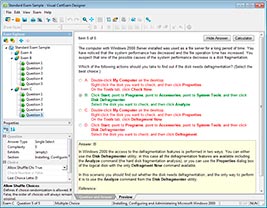
HOW TO OPEN VCE FILES
Use VCE Exam Simulator to open VCE files
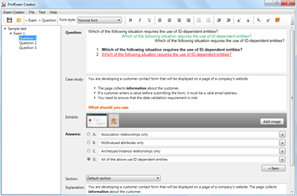
HOW TO OPEN VCEX AND EXAM FILES
Use ProfExam Simulator to open VCEX and EXAM files
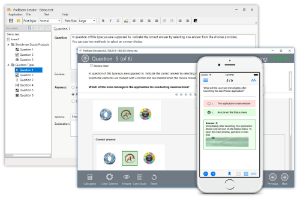
ProfExam at a 20% markdown
You have the opportunity to purchase ProfExam at a 20% reduced price
Get Now!